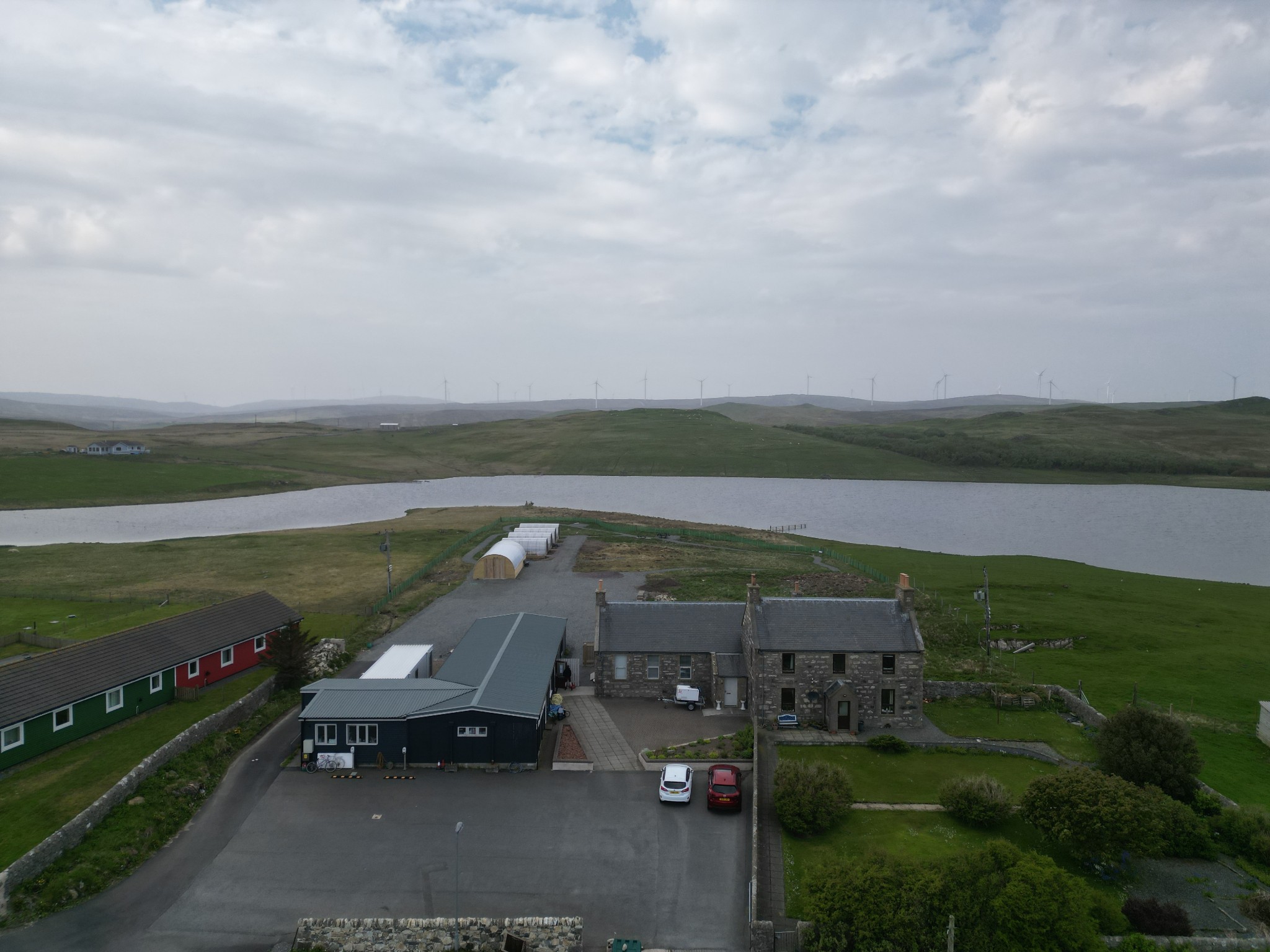
Our current and upcoming projects focus on delivering community priorities, planning for the area’s future and improving the long-term sustainability of the Aald Skül.
CDCN works with local residents, community groups and partner organisations to develop and deliver projects for Nesting, Girlsta and Wadbister.
Projects are at different stages of development and may depend on community support, partnership working, permissions and the availability of funding.
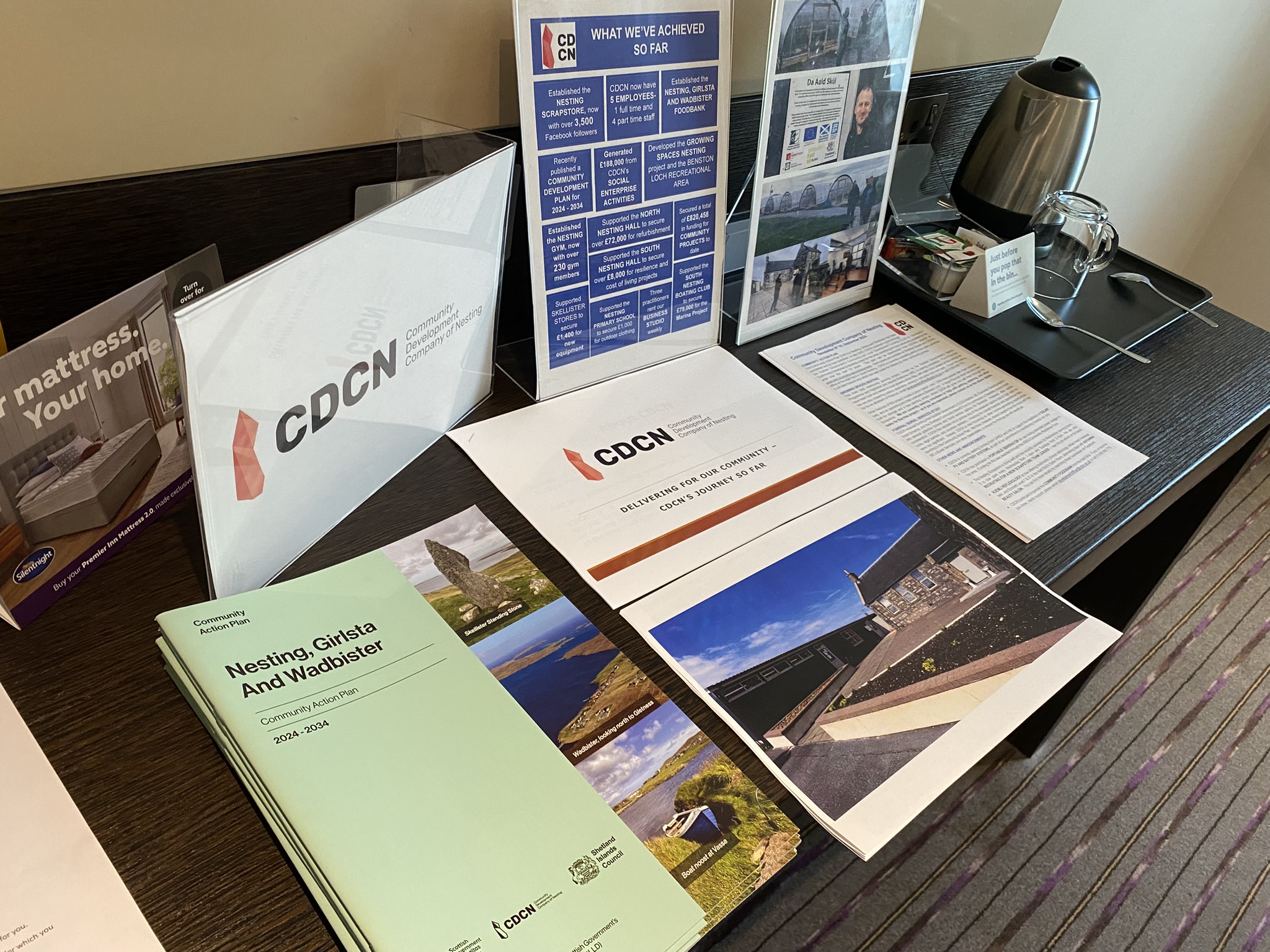
Community Action Plan 2024–2034
The Nesting, Girlsta and Wadbister Community Action Plan 2024–2034 identifies the priorities expressed by local residents, community groups, businesses and other stakeholders.
CDCN is working to progress the priorities for which it is best placed to take the lead, while supporting other local groups and partner organisations to develop related projects.
Delivery of the plan is ongoing and will depend on partnership working, community involvement and the availability of funding.
Read about the Community Action Plan 2024–2034
Nesting and Lunnasting Local Place Plan
CDCN is developing a Local Place Plan covering the communities of Nesting and Lunnasting.
The plan will identify locally important places, facilities and priorities relating to the development and use of land. It will help ensure that community views are considered in future planning decisions.
Girlsta and Wadbister are not included within this Local Place Plan area, as they are being covered through Local Place Plan work for the Tingwall, Whiteness and Weisdale Community Council area.
The Nesting and Lunnasting Local Place Plan is currently being developed. Further information, including opportunities for community input, will be shared as the work progresses.
Aald Skül Low-Carbon Improvements
CDCN is undertaking a programme of low-carbon and energy-efficiency improvements at the Aald Skül to reduce energy use, manage running costs and improve the long-term sustainability of the community hub.
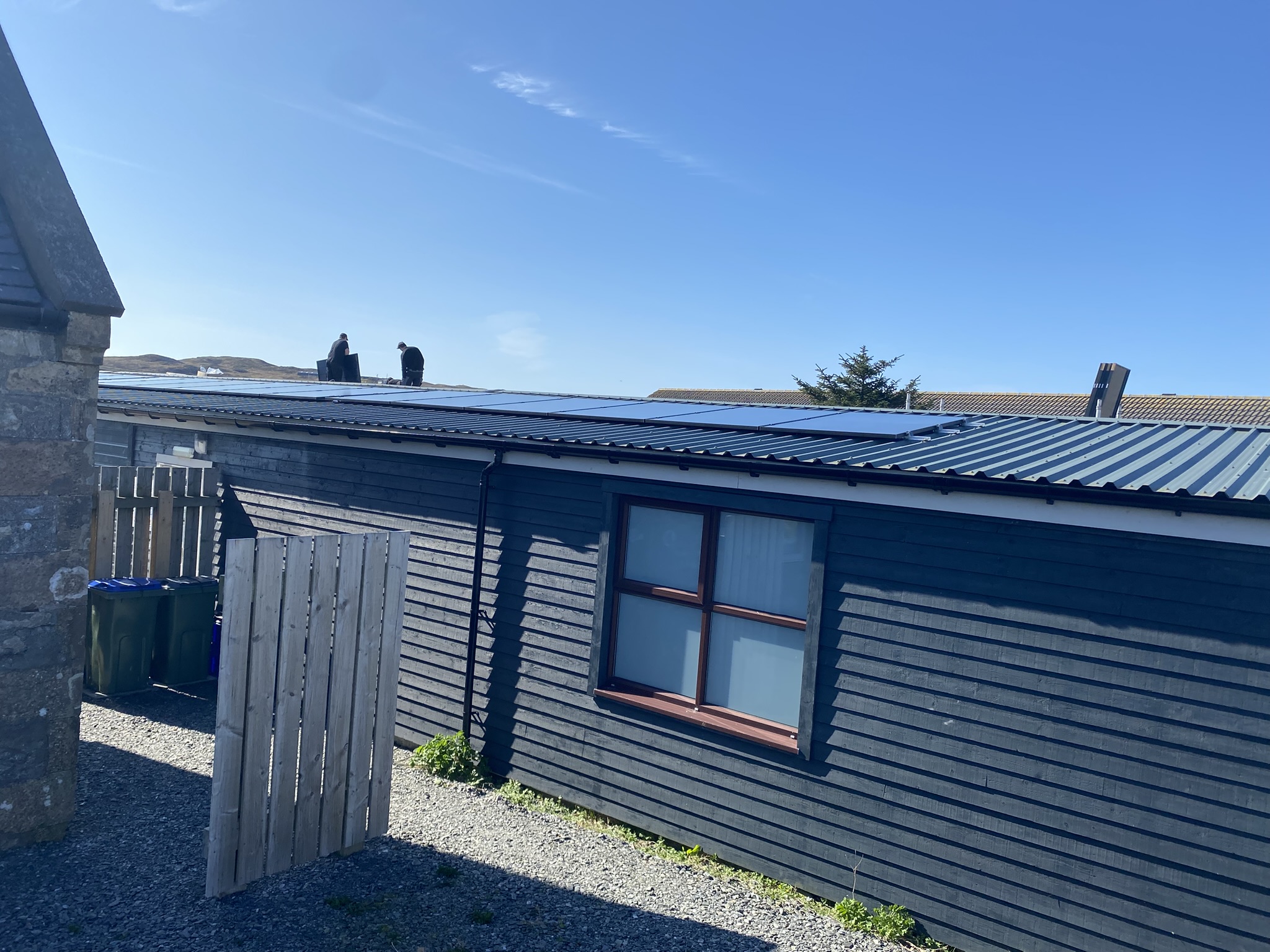
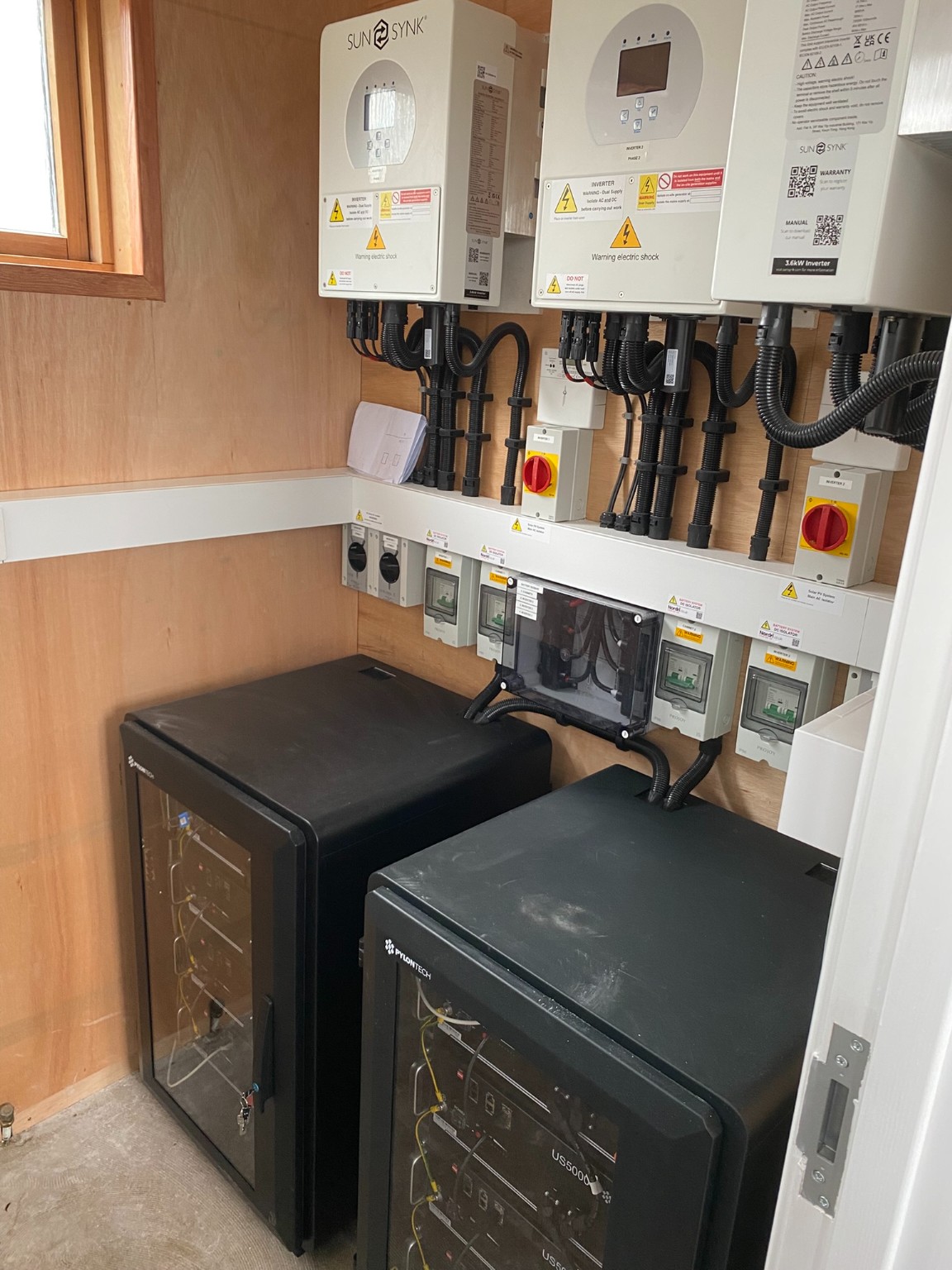
In 2025, a 21.87 kWp solar photovoltaic system comprising 54 panels was installed, together with 38.4 kWh of battery storage. The system is designed to generate approximately 13,700 kWh of electricity each year, with the batteries allowing more locally generated energy to be stored and used at the Aald Skül.
The solar and battery installation represented an investment of approximately £51,639 before VAT. Highlands and Islands Enterprise was the principal funder, contributing 70% of the project cost. The remaining 30% was provided by the Shetland Community Benefit Fund through the Viking Community Fund. Earlier building-warrant work was supported through the Scottish Government’s Community and Renewable Energy Scheme, delivered by Local Energy Scotland.
The solar PV and battery system is now operational. Subsequent work has included completing system connections, monitoring its performance and establishing the smart-meter arrangements required to make better use of electricity tariffs and export opportunities.
CDCN has also pursued further improvements to the energy efficiency and resilience of its facilities. This has included improved Scrapstore heating and lighting, alongside the investigation of air-source heating and electric-vehicle charging.
Further improvements will be progressed where they are technically suitable and funding is available.
Practical Improvements and Smaller Projects
Alongside its larger programmes, CDCN progresses smaller practical projects that respond to local priorities and improve community facilities.
Community Defibrillator
Installation in progress
Following a priority identified through the Community Action Plan, CDCN purchased a community defibrillator for the Aald Skül in July 2026. Installation and the practical arrangements needed to make it available for community use are now being progressed.
Funding acknowledgement
Funding for the community defibrillator was provided by Tesco.

Polycrub Upgrades
Pending funding
CDCN is seeking funding for practical improvements to one of the community Polycrubs, including a concrete floor, an internal partition and an external door. The proposed work would make the space more durable, accessible and flexible for community use.
Nesting and Lunnasting Local Place Plan
CDCN is developing a Local Place Plan covering the communities of Nesting and Lunnasting.
The plan will identify locally important places, facilities and priorities relating to the development and use of land. It will help ensure that community views are considered in future planning decisions.
Girlsta and Wadbister are not included within this Local Place Plan area, as they are being covered through Local Place Plan work for the Tingwall, Whiteness and Weisdale Community Council area.
Local Place Plan drop-in sessions took place at South Nesting Hall and Vidlin Hall on 17 September 2026, alongside engagement with pupils at Vidlin Primary. Thank you to everyone who shared their views, ideas and local knowledge.
The Nesting and Lunnasting Local Place Plan survey is now closed. Thank you to everyone who completed the survey or contributed through the drop-in sessions and other engagement. Your views, ideas and local knowledge will help inform the development of the plan.
Read the survey closure update
Funding acknowledgement
The Nesting and Lunnasting Local Place Plan is supported by £7,500 from Shetland Community Benefit Fund through the Viking Community Fund’s Community Grant Scheme.

Community Action Plan 2024–2034: Delivery
Ongoing from 2024
The completed Nesting, Girlsta and Wadbister Community Action Plan 2024–2034 provides a long-term framework based on priorities identified by local residents, community groups, businesses and other stakeholders.
CDCN is working to progress the priorities for which it is best placed to take the lead, while supporting other local groups and partner organisations to develop related projects.
Delivery of the plan is ongoing and will depend on partnership working, continued community involvement and the availability of funding.
Community Foodbank Service
Ongoing since 2022
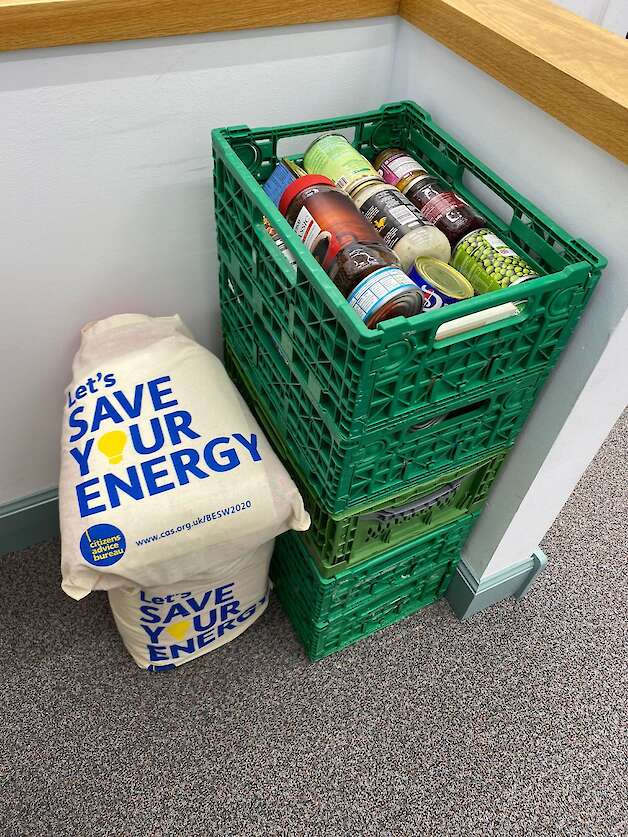
CDCN established the Community Foodbank Service in November 2022 to support households in Nesting, Girlsta and Wadbister during the cost-of-living crisis.
Working with Shetland Foodbank, CDCN collects local donations, arranges prepared parcels and delivers support discreetly within the area. Skellister Stores is the sole donation drop-off point for the Community Foodbank Service.
Find out about the Community Foodbank Service
Community partner
Skellister Stores supports the service by providing the sole local donation drop-off point.


